QuantaPhi Learn · selected overview
Ruthenium: element 44
What is ruthenium? Ruthenium is a chemical element with symbol Ru and atomic number 44. It is a transition metal in group 8, period 5, and is solid at room temperature. [1]
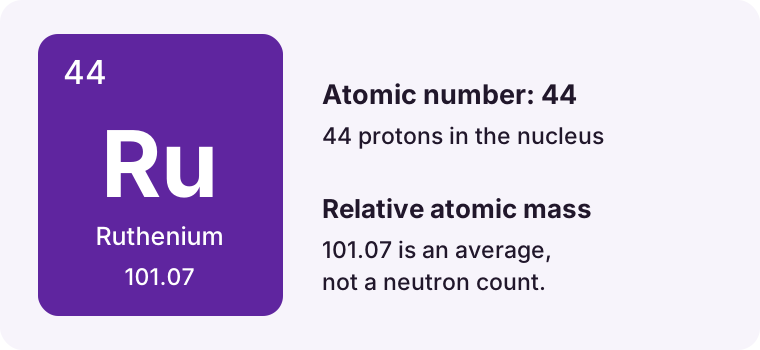
Read the numbers correctly
Every ruthenium nucleus has 44 protons. A neutral ruthenium atom also has 44 electrons. Isotopes share the proton count but differ in neutron count. [2] [3]
| Quantity | Ruthenium example | Meaning |
|---|---|---|
| Atomic number | 44 | Protons in the nucleus |
| Mass number | 102 in ruthenium-102 | Protons plus neutrons in one isotope |
| Relative atomic mass | 101.07 | Average for the element; not a neutron count |
A worked example
For ruthenium-102, subtract the proton count from the mass number: 102 − 44 = 58 neutrons. The 102 names this isotope. You cannot calculate an individual isotope’s neutron count by subtracting 44 from the decimal 101.07.
Where is ruthenium useful?
Ruthenium is used in some electrical contacts and chip resistors. It can harden platinum and palladium alloys, and ruthenium compounds can act as catalysts. Ruthenium oxide is used in electrochemical anodes for chlorine production. These uses depend on the material’s form and the particular application. [1]
How to investigate a claim
“Ruthenium is used in electronics” is a starting point. A fuller search asks which component, whether the material is metallic ruthenium or a compound, and what source supports that specific use. A statement about one form should not silently become a statement about every ruthenium material.
Check your understanding: does a charged ruthenium atom become a new element?
No. Changing the electron count changes charge. Changing the proton count changes the element. Changing only the neutron count changes the isotope.
Extraction notes
This selected lesson turns concrete extraction terms—Ru, 44, ruthenium-102, electrical contacts and catalysts—into an explanation with a comparison and a worked example. The public lesson catalog records the terms and source links. A live search may return additional terms; those remain discoveries until checked.
Sources and what they support
- Royal Society of Chemistry: Ruthenium — Element properties, relative atomic mass, isotope information and uses.
- IUPAC Gold Book: Atomic number — Definition of atomic number.
- US Department of Energy: Isotopes — How proton and neutron counts distinguish elements and isotopes.